Gambling has existed in various forms for centuries, captivating players with the promise of fortune and thrills. Among the myriad ways people place bets, lottery games and casino gambling stand out as two of the most popular avenues. Although they share similarities in offering the potential for high rewards, they are distinct in their structure, gameplay, and the odds of winning. In this article, we will explore both the similarities and differences between lottery and casino gambling, examine their appeal togel sdy, and discuss the risks and ethical considerations associated with them.
The History and Evolution of Gambling Games
Before diving into the specifics of lottery and casino gambling, it’s important to understand the historical context in which these activities evolved. Gambling is deeply rooted in human culture, dating back to ancient civilizations like the Greeks and Romans. The earliest forms of gambling involved simple dice games or betting on athletic contests. Over the centuries, games of chance became more organized, culminating in the development of more structured forms like lotteries and casino games.
The Birth of Lotteries
Lotteries trace their origins back to ancient China, where they were used to finance government projects like the Great Wall. In the modern era, the first official lottery in Europe was organized in the 15th century in Bruges, Belgium, with the proceeds directed toward charitable causes. Throughout the 18th and 19th centuries, lotteries gained popularity across Europe and America, often used as a means to fund public infrastructure like roads, schools, and even military operations.
The modern state-run lottery became particularly prominent in the United States in the 1960s, following the lifting of a federal ban. Today, nearly every state in the U.S. offers some form of lottery, generating billions in revenue for local governments. Lotteries have since evolved into multi-state games like Powerball and Mega Millions, with jackpots often reaching into the hundreds of millions of dollars.
The Emergence of Casinos
The casino industry, on the other hand, traces its roots to Italy in the 17th century, where the first gambling houses were established. By the early 20th century, casinos had spread across Europe, particularly to Monaco’s famous Casino de Monte-Carlo, and were gaining popularity in the United States. The legalization of casino gambling in Nevada in 1931 marked the beginning of the modern casino industry in the U.S., with Las Vegas becoming the gambling capital of the world.
Today, casinos can be found around the globe, from the opulent resorts of Macau and Singapore to the entertainment hubs of Las Vegas and Atlantic City. While lotteries are often state-run, casinos are primarily private enterprises, with games ranging from table games like blackjack and roulette to a vast array of slot machines.
Lottery vs. Casino Gambling: Key Differences
While both lotteries and casinos offer opportunities to gamble for large sums of money, the differences between the two are significant. Let’s break down the key distinctions:
1. The Odds of Winning
Perhaps the most fundamental difference between lotteries and casino gambling is the odds of winning.
-
Lotteries are designed to be difficult to win. For example, the odds of winning the Powerball jackpot are roughly 1 in 292 million. While the prizes can be enormous, the likelihood of winning is extremely low.
-
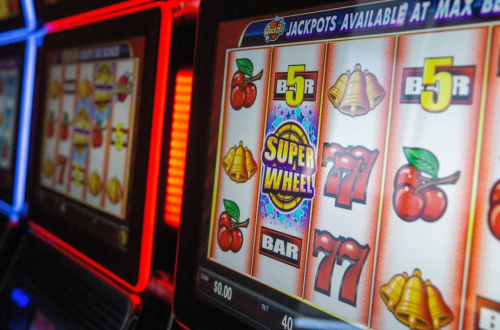
Casino gambling, on the other hand, offers better odds, though they are still heavily in favor of the house. The odds vary depending on the game. For example, blackjack offers a house edge of about 1%, while the odds of winning on a slot machine can be as high as 5% in some cases.
While the lottery is an example of a game with fixed odds, many casino games involve a combination of skill and luck, which can influence the outcome.
2. Game Mechanics and Player Control
In lottery games, players typically have no influence over the outcome beyond choosing their numbers. These games are purely based on luck and chance. There is no strategy, skill, or decision-making involved; it’s all about whether the chosen numbers align with the drawn ones.
In contrast, casino games provide players with a greater sense of control over the outcome, especially in games like blackjack, poker, and even craps. For example, in blackjack, players can use strategies to minimize the house edge. In poker, success relies heavily on reading opponents, bluffing, and understanding probabilities. Skill-based games like these offer players a better chance of influencing their success compared to lottery games, where the outcome is entirely random.